

OUR ORGANIZATIONS
Browse our full list and give directly to the cause and organization that resonates most with you.
Our charities have been rigorously evaluated to help you make the biggest impact per dollar. HIA charges no fees — 100% of your donation reaches your chosen charity.
GLOBAL HEALTH & POVERTY
CAUSE AREA
An estimated 525,000 children under five die from diarrhea each year, often due to unsafe water. Evidence Action's Safe Water Now installs chlorine dispensers directly next to untreated water sources, allowing residents to add a precise dose of diluted chlorine to their jerricans before filling with water. At less than $1.50 per person per year, it is one of the most cost-effective approaches to unsafe water in poor, rural areas.

Acute malnutrition kills hundreds of thousands of children every year, yet effective community-based treatments exist. Taimaka delivers these proven interventions in some of the world's most underserved regions, treating and preventing severe acute malnutrition at the community level. Their approach reaches children who would otherwise have no access to care, at a fraction of the cost of hospital-based treatment.
Imagine two Boeing 747's full of children under the age of 5 crashing every single day — that's how many children die daily from malaria. Against Malaria Foundation distributes long-lasting, insecticide-treated mosquito nets to susceptible populations in developing countries. For only $2.77 you can protect a child from malaria for up to 5 years.

Vitamin A deficiency is the leading cause of preventable blindness in children, and increases the risk of disease and death from severe infections. Helen Keller International's Vitamin A Supplementation Program provides critical nutrition to children at-risk for vitamin A deficiency — a condition that can lead to blindness and death. Each child can be treated for an average cost of only $1.23.

New Incentives educates caregivers about the importance of vaccinating children and disburses cash incentives conditional on infants receiving four life-saving vaccines, provided through government clinics free of charge. There is strong evidence that their program leads to more children being immunized from life-threatening but vaccine-preventable diseases.
CAUSE AREAMENTAL HEALTH

StrongMinds improves the mental health of women living in poverty in Africa by training local therapists to deliver group talk therapy to women suffering from depression and anxiety. By focusing on women, StrongMinds creates a ripple effect that improves not only individual mental health but the wellbeing of entire families and communities.
In low-income countries, up to 75% of people with mental health conditions receive no treatment at all — largely due to a severe shortage of trained professionals. Friendship Bench trains and supports lay health workers, often grandmothers, to deliver evidence-based talk therapy in local communities. Their low-cost, culturally grounded model has been proven in clinical trials to significantly reduce depression and suicidal ideation.
Action for Happiness teaches people the evidence-based skills to build happier, more fulfilling lives — and to help those around them do the same. Their programmes, grounded in positive psychology and the science of wellbeing, are delivered through a global community of over 750,000 members across 190 countries. By equipping people with practical tools to improve their own mental health, they create ripple effects that strengthen families, workplaces, and communities.
CAUSE AREAANIMAL WELFARE
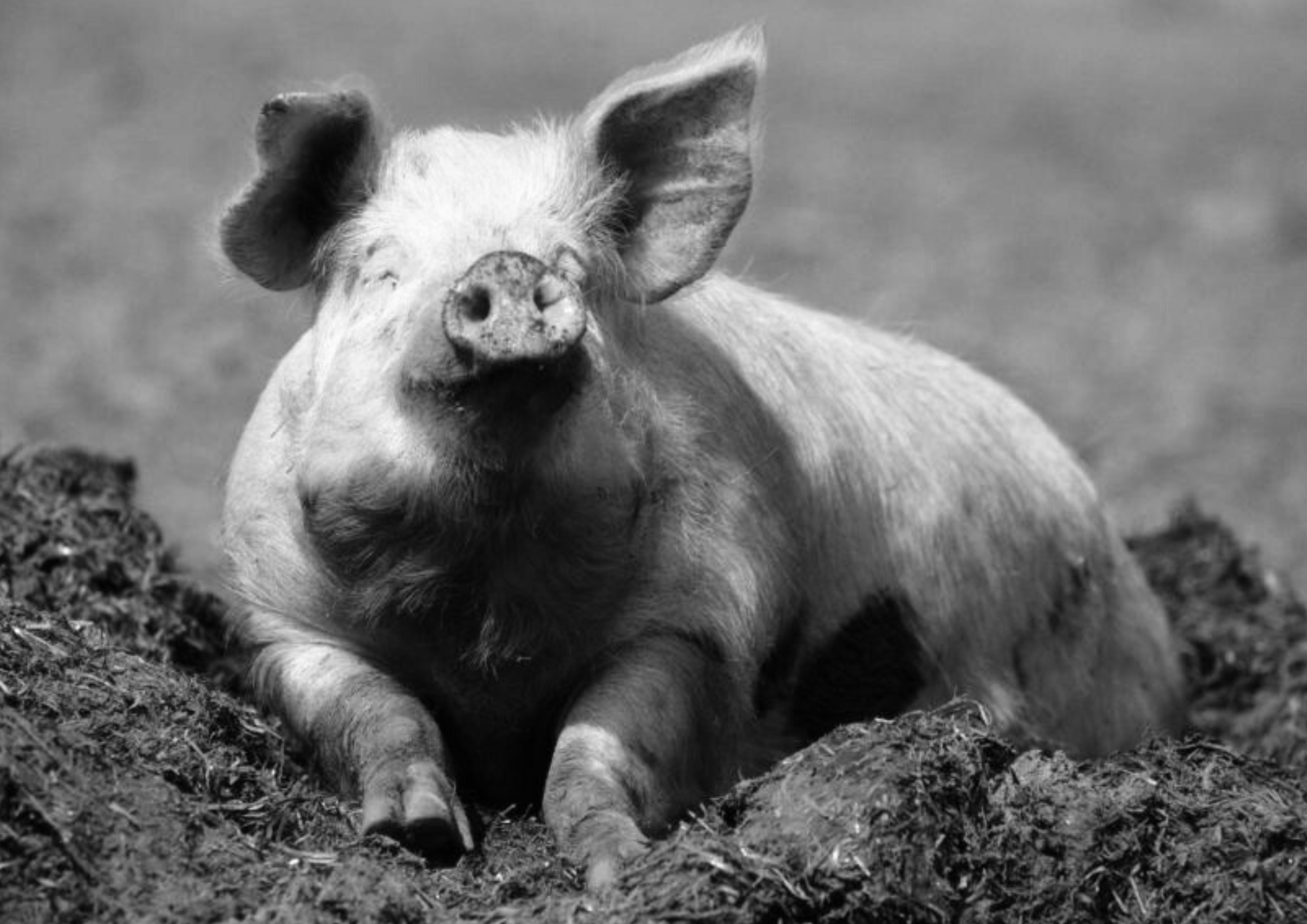
Over 80 billion land animals are raised in factory farms every year, the majority in cages and crates that prevent them from performing even the most basic natural behaviours. The Humane League wins corporate commitments to phase out cages and crates through targeted campaigns and corporate outreach. To date they have secured over 300 major cage-free policies from some of the world's largest food companies — one of the most cost-effective ways to reduce animal suffering at scale.

Conventional meat production causes immense animal suffering, environmental damage, and global health risks. The Good Food Institute accelerates the development of plant-based and cell-cultured meat alternatives — working to make them tastier, cheaper, and more accessible than conventional animal products. Their open-access research, regulatory advocacy, and industry development helped secure $390M in government funding for sustainable protein innovation in 2022 alone.
Latin America is home to some of the world's largest factory farming operations, yet animal welfare protections remain severely underdeveloped. Sinergia Animal runs high-impact campaigns to end extreme confinement across the region — persuading major food companies to free pigs from gestation crates and winning 152 cage-free egg commitments from corporations operating across Brazil, Argentina, Colombia, and beyond. Animal Charity Evaluators has named them a Top Charity multiple years running.
Anima International strengthens animal protections across Europe through corporate campaigning, legislative advocacy, and public outreach. Their work has delivered measurable, large-scale change: caged egg production has been cut by 20% in Poland alone, and over 380 companies have adopted fur-free policies following Anima International campaigns. Operating across more than a dozen European countries, they focus on interventions with the highest impact per animal helped.
WOMEN’S EMPOWERMENT
CAUSE AREACAUSE AREACLIMATE SOLUTIONS

Aviation and shipping make up roughly 65% of sport's carbon footprint. Opportunity Green works at the level capable of shifting this at scale: international law. OG is a U.K.-based nonprofit using legal, policy, and economic tools to cut aviation and maritime shipping emissions. They work where change actually shifts outcomes: international and EU regulation. Their approach combines support for climate-vulnerable countries in global negotiations, advocacy for stronger EU rules, and coalition-building to speed up clean fuel adoption. OG fills a crucial gap in the climate ecosystem by bringing high-quality legal, policy, and diplomatic expertise to sectors that have long been overlooked.
Athletes Who Donate
Bruno Soares · Daniel Vallverdu · David Wheeler · Doug Lynch · Dusan Lajovic · Ellis Spiezia · Eric Radford · Erin Routliffe · Finn Reynolds · Fiona Burnet · Gab Dabrowski · Gastao Elias · Georgia Brown · Georgie Kelly · Hamish Kerr · Hugo Inglis · Jacob Smith · James Cerretani · Jamie Farndale · Jamie Murray · Jan-Lennard Struff · Joe Choong · Joran Vliegen · Jordan Cohen · Kirsten Nation · Liam Corrigan · Luisa Stefani · Luke Smith · Luuka Jones · Mara Abbott · Marcus Daniell · Matwe Middelkoop · Melissa Wilson · Michaela Blyde · Naya Crittenden · Nic Woods · Oliver Scholfield · Polly Inglis · Ryan Fox · Sander Gille · Sharon Fichman · Tim Puetz · Tom Toolis

Travel and energy drive the majority of athlete emissions. Clean Air Task Force builds the future grid and fuels needed to decarbonize everything from stadiums to team transport. CATF is a U.S.-based nonprofit advancing the technologies and policies needed to cut emissions across entire economies. They operate globally across the U.S., EU, Middle East, and Africa. CATF is known for technical depth and major policy wins — focusing on neglected but essential solutions such as clean firm power, zero-carbon fuels, superhot rock geothermal, grid decarbonization, aviation, and shipping. Their history of influence includes major climate provisions in the Infrastructure Investment and Jobs Act and the Global Methane Pledge.
Athletes Who Donate
Bruno Soares · Daniel Vallverdu · David Wheeler · Doug Lynch · Dusan Lajovic · Ellis Spiezia · Eric Radford · Erin Routliffe · Finn Reynolds · Fiona Burnet · Gab Dabrowski · Gastao Elias · Georgia Brown · Georgie Kelly · Hamish Kerr · Hugo Inglis · Jacob Smith · James Cerretani · Jamie Farndale · Jamie Murray · Jan-Lennard Struff · Joe Choong · Joran Vliegen · Jordan Cohen · Kirsten Nation · Liam Corrigan · Luisa Stefani · Luke Smith · Luuka Jones · Mara Abbott · Marcus Daniell · Matwe Middelkoop · Melissa Wilson · Michaela Blyde · Naya Crittenden · Nic Woods · Oliver Scholfield · Polly Inglis · Ryan Fox · Sander Gille · Sharon Fichman · Tim Puetz · Tom Toolis

Stadiums, tracks, arenas, and pools rely on high-carbon materials. Future Cleantech Architects accelerates innovation in steel and cement, cutting the carbon of sport's physical footprint. FCA is a German climate-innovation think tank focused on heavy-industry materials emissions — a sector that needs major technological leaps and stronger policy direction but rarely receives enough attention. FCA closes this gap by working directly with policymakers to prioritise critical R&D and by leading scientific research that pushes forward high-impact solutions. Their technical expertise and ability to translate engineering insights into high-level decision-making has helped shape key EU debates and contributed to major international forums.
Athletes Who Donate
Recently added to SOCZ — watch this space!

Sport depends on stable, reliable power. Project InnerSpace drives geothermal clean baseload electricity that keeps stadiums and training centres running every hour of the day. InnerSpace is a U.S.-based nonprofit active across the U.K., India, Indonesia, Africa, and more — pushing next-generation geothermal into mainstream clean power. Geothermal provides clean, always-on electricity and new technologies could unlock it across major regions. InnerSpace accelerates this by mapping resources, backing early projects, reducing investor risk, and connecting developers with buyers and policymakers.
Athletes Who Donate
Recently added to SOCZ — watch this space!